• Science!

    I’ve been on a deep dive on biasing JFET gain stages for guitar pedals over the past couple of weeks.  It’s been a lot of time in the weeds, but I’m emerging with a quicker and more consistent method of biasing for the results I want.
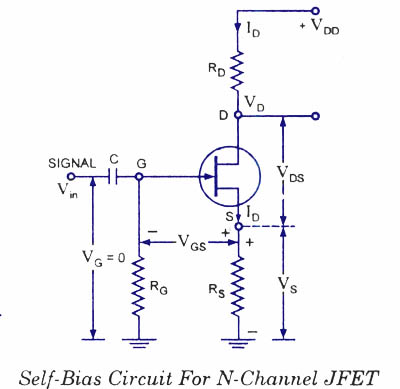
    Setting aside the details aside (links here, here, here, and here if you want those), within a batch of JFETs of the same part number individual characteristics will vary quite a bit.  To get reliable performance, JFETs must be measured and either 1) sorted into a group that will work in a given circuit and a group that won’t, or 2) individually biased to work in a circuit by adjusting the resistors surrounding the JFET (Rd and Rs in the diagram above).

    I’ve been running controlled experiments, recording results, and generally doing low-level basement science and engineering with the goals of learning what matters and what doesn’t, and figuring out efficient ways of achieving the results I need for pedals.

    There are a couple more things to check, but I’ll present conclusions and my biasing method (nothing novel, just a straightforward step-by-step process) here or at mrfuriousaudio.com when I have them.

  • Dark Satellites & Mars Lights Show Update

    2016 August 6, Saturday – Dark Satellites at the Jackpot, Lawrence KS, with Way Back When, The Marshmallow Test, and Some Good News From Kansas.  9 PM, 18 & over, $5 ($7 for 18-21)

    DS Jackpot Aug 2016

    2016 August 17, Wednesday – Mars Lights at Davey’s Uptown, Kansas City MO, with 88er and You Monster You

    daveys uptown

    2016 September 23, Friday – Dark Satellites at Records with Merritt, Kansas City MO.  Free, all ages, 8 PM

    2016 October 27, Thursday – Dark Satellites at Vega, Lincoln NE, with Briner

    2016 October 28, Friday – Dark Satellites at Gillies, Kearney NE, with Evanoff
  • Mr. Furious Audio Giambattista Tremolo Demo Video

  • Howie’s “MF Drive” Pedal Demo Video

  • EQ Phase in Parallel Processing Test

    This video taught me about phase change in EQ.  It freaked me out a bit because I’ve used plenty of EQ in parallel processing during mixing on reverb and drum compression sends.

    I did some testing in Reaper that reassured me that I haven’t made egregious mistakes in my mixes. The phase change around an EQ’s cutoff frequency is worth keeping in mind, but doesn’t drastically affect the summed output of signals in parallel.

    Click to enlarge
    Click to enlarge

    What you see above is my test Reaper session.  Fuzz’s song “Rat Race” is on two tracks playing in parallel; one has a high pass filter at 500 Hz (the top plugin window) and it’s phase change is also displayed as the orange line.  You can see that the EQ’d signal is somewhat out of phase with the unprocessed signal well above 500 Hz, potentially resulting in phase cancellation above 500 Hz when the signals are summed.

    The spectrum analyzer (lower plugin window) shows the summed signals (the green background spectrum) and the unprocessed signal by itself (the pink foreground spectrum, which mostly looks lighter green where it’s overlaid on the summed signal).

    What I notice is that the difference between the original (green) and parallel-processed-and-EQ’d (pink) signals diverges right at about 500 Hz and the difference is pretty consistent above that point.  For me, this is great news; the parallel processing behaves almost exactly as I naively expected it would, before I knew about the phase change described in the video.

    A bad result would have been if the difference between the green and pink spectra began diverging around 500 Hz but grew slowly, up to 5K or 10K.  That would have meant that in my mixes, I was losing information between (in this example) 500 Hz and 10K without realizing it or compensating for the loss.

    tl;dr – Sighs of relief and feelings of bullets dodged in the Studio/Laundry Room of Fury.

  • Nothing Like…

    …shooting material for two videos, then realizing there’s something wrong with your camera.  :-|

    Hopefully next week.  Taking off in an hour for Omaha and the DS show tonight.

  • Rainy Saturday Pedal Building

    This afternoon I’ll be building the first Giambattista Tremolo in a one-off custom enclosure courtesy of Seth M Jones.  I did the LED and bypass wiring yesterday to give myself a head start.

    IMG_0483

    The Giambattista is based on the old Jordan Vico Vibe (and a layout by Nicholas Kula).  I’ve added a JFET boost and volume control on the output, which others have done with this circuit.  I’ve also moved the bias (which affects the pulse width) control to the outside of the enclosure, and added a fast/slow rate range toggle, which I haven’t seen done before.

    The Vico Vibe is a great, vintage-sounding tremolo, but the knock on it is that the rate range is fairly narrow (and quite fast, with stock components).  The Giambattista, with its fast/slow ranges, will go from faux-ring modulation fast to obscenely slow.
    IMG_0484

    More videos on the way once it’s done.

  • Buncha Upcoming Mars Lights & Dark Satellits Shows

    2016 July 9, Saturday – Dark Satellites at Barley Street Tavern, Omaha NE, with Lodgings, Sweats, and Relax It’s Science. 7 PM doors, 9 PM show, probably 21+, $5.

    2016 July 15, Friday – Mars Lights at Boobie Trap Bar (program note; not a strip club), Topeka KS

    2016 July 16, Saturday – Mars Lights at Records With Merritt, Kansas City MO, with Red Cities and Bogusman.  Maybe 8 PM show?  Free! (buy records!)

    2016 July 21, Thursday – Dark Satellites at Replay Lounge, Lawrence KS, with Varma Cross and Candace.  10 PM show, ? ages, $3

    ON HOLD FOR CONFIRMATION as of 8 July: 2016 August 12, Friday – Dark Satellites at Replay Lounge, Lawrence KS, with Universe Contest.  10 PM show, ? ages, ? $

  • Falcon vs. Falcon Heavy

    Here’s a comparison video showing the MOSFET (Falcon) vs. silicon (Falcon Heavy) clipping and low-mid (Falcon) vs. Russian Muff mid (Falcon Heavy) cuts on guitar.

    What I didn’t show, and should have, his the higher gain range on the Falcon Heavy’s silicon setting. In the first comparison the Falcon’s drive is dimed, while the Heavy’s drive (out of the picture) is at maybe 65-70%.

    This is to help guitarists who want one to choose between the Falcon and Falcon Heavy. I recommend the Heavy for bassists, *unless* you’re going to leave the pedal on all the time; in that case I could see a bassist going for a Falcon, especially for a more vintage sound.

  • Falcon Drive Demo

    Domain forwarding for mrfuriousaudio.com is pending, so ignore that for the next 24 hours or so.

    Sorry again about my dumb socks.

  • Happy Belated 50th Sparks

    IMG_0441

    I had a head off of my gold sparkle kit last night preparing for the Dark Satellites show, and saw the stamp marking it manufactured in February 1966.  So, happy belated 50th birthday to my drums.

  • Falcon Noise Reduction

    When I took the Falcon to Drew’s last week it sounded great, but we noticed it was pretty noisy (hum/interference-type noise, not the good kind).  So I’ve been on a zag to improve the power filtering.  I’ve added a part to #0001, and will add it and change the value of another part for future builds.

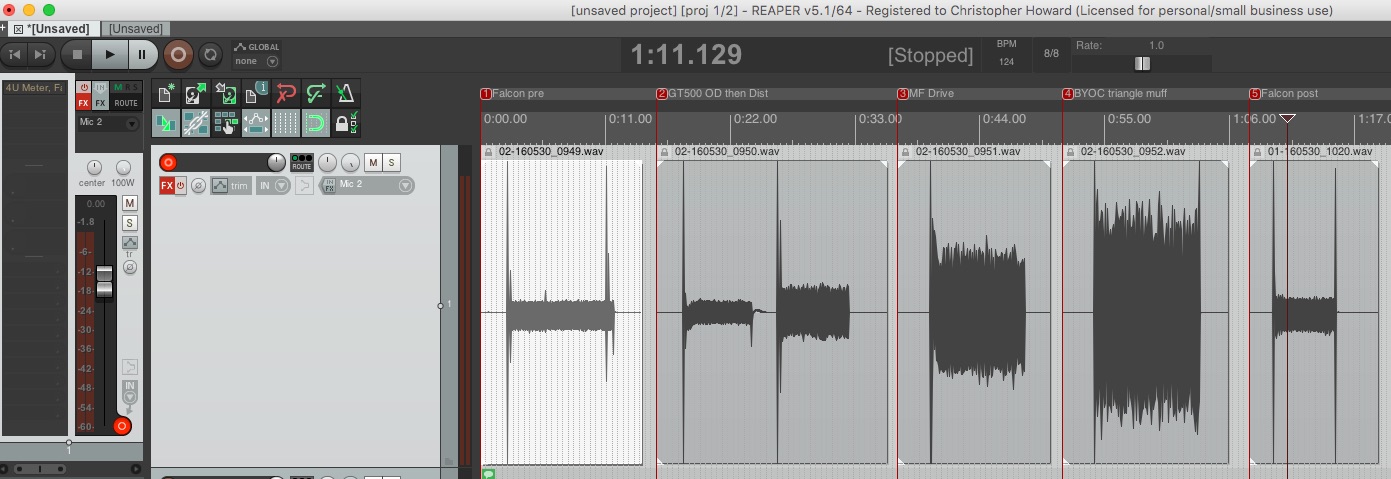
    Here’s a test running several pedals direct into Reaper with their controls dimed:

    FalconNoise

    1. Falcon (pre-change)
    2. Fulltone GT500 (OD side, then distortion side)
    3. Moog MF Drive
    4. BYOC Large Beaver (EHX Triangle Muff specs, with a larger input cap)
    5. Falcon (post-change)

    This test did not control for different levels of gain available from each pedal; while it looks like the Large Beaver is the noisiest pedal, it’s also the fuzz in the group and probably has the most gain available.

    While today’s change didn’t reduce the Falcon’s noise in dB it did change the frequency of the noise some, reducing bass frequencies.  I judge this to be an improvement.

    An ear test with the Falcon maxed out vs. the MF Drive set for a similar gain and sound resulted in similar noise levels between the two pedals.  This lets me feel like the Falcon’s noise is acceptable, if not necessarily optimal.  The tradeoffs for better power filtering internally are a greater part count and/or a small loss of voltage available to the circuit.

    I’ve learned a way to further reduce the switch pop you see at the beginning and end of each test (the large spikes when turning the pedal on and off).  It’s impractical to go back and implement on model #0001, but I’ll incorporate it into future builds.  #0001’s pops are already comparable to many high-quality pedals – usually passing unnoticed, especially playing into a dirty amp – so hopefully this change will reduce future Falcons’ pops below average.